

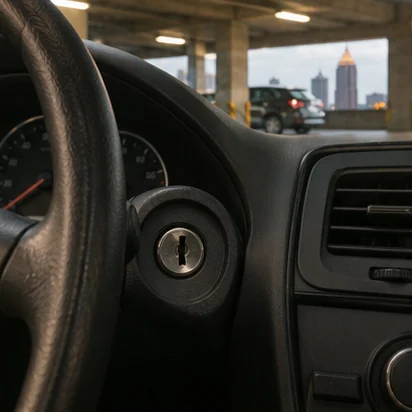
Only one part of the vehicle is giving trouble
If the passenger door responds to the remote but the driver door stays locked, describe that instead of saying the whole remote stopped working. If both remotes behave the same way, say so. If one works, keep it handy for comparison. A worn mechanical key and a door lock problem can feel similar from the outside. The way a second key behaves, whether a cylinder moves at all and what happened before the problem started can help narrow the question.
Note the difference between a physical key, a remote with a flip-out blade and a push-button fob with an emergency insert. Drivers may call all of them a remote. The physical blade can still matter if you need to get through a door while the electronic side is being evaluated. If the vehicle has an aftermarket remote start or a previously replaced ignition, mention that during the call. The year and model describe how it left the factory. They cannot tell us everything that has happened to it since.
When the car is in a lot, garage or valet area
In a Buckhead office deck, a street number may get you to a lobby without identifying the way in for a vehicle. In Midtown, a garage may have a public entrance, a permit entrance and a pedestrian exit on different sides of the same building. Give us the entrance you used, any deck or lot name, a level and the nearest row marking. Mention security gates, a staffed booth or vehicle height restrictions. If there is a valet, ask what is allowed before scheduling work at the pickup point.
For a car parked outside, tell us whether it can remain there while we work and whether it sits close to a loading zone, an active lane or a narrow driveway. If the location changes, update us before the visit. A cross street and your best contact number make it easier to reconnect if a pin drops at the wrong side of a building. If it is a fleet or rental vehicle, have the authorized representative reachable. Work on the vehicle may require their approval even if you have been driving it.
Choose the work you are authorizing
Roadside assistance, a fleet help line or a dealership may already be part of your plan. If someone else has started a claim or arranged a visit, tell us before scheduling. Check whose authorization is needed on the vehicle and whether the company has to approve the amount in advance. If you need a car moved for a time restriction, say whether it can be unlocked and driven or whether a tow is already being arranged. A vehicle that cannot start after entry may need a different kind of appointment.
A key or remote that occasionally stopped working before today is worth describing. If the remote quit after getting wet, mention the event. If a mechanical key has become rough to insert over several weeks, report that timeline instead. Bring a spare, if you have it, and let us know if it has been sitting unused. We can compare the way the vehicle responds to each of them. Tell us if the problem began after body, ignition or electrical work. That is often more useful than trying to name a failed component you cannot see.
Give an exact address and a safe spot to meet first, then tell us the key details. The work is easier to plan once we understand where the vehicle is and what it does with the keys you have.
An ignition symptom deserves its own description
Tell us whether the blade goes in, whether the cylinder moves at all and whether the engine turns over. Say if a dashboard message appeared or if there was earlier work on the key or ignition. You do not need to diagnose it over the phone. A cylinder that sticks, a vehicle that does not recognize a key and a vehicle with a starting or electrical fault can all produce the same shorthand description, "it won't start." Their repair paths are different.
If a key has become hard to turn, avoid using more force. A bent or cracked key can turn an intermittent problem into a broken piece in the cylinder. If the steering wheel or gear selector seems involved, note what position it was in and what the vehicle displays. For a push-button car, share the exact message if you can read it. If you have a spare, report whether it behaves differently. Even a quick description of what still works can be more useful than the part name you suspect.
What changes if there are no keys left
If a key is locked in the car and can be recovered, tell us where you last saw it and whether there is another driver with a spare. If the only key is lost, ask about car key replacement when you call. We need the exact vehicle details and may need additional information about the key configuration and proof of authority. A look-alike part from a listing may work for a different system or trim. There can also be separate decisions about the remote functions and physical backup blade.
When a key disappears, think about where it was lost and who should retain access. On supported vehicles we can discuss what can be changed in the vehicle's registered keys. A metal blade and an electronic credential can retain different kinds of access, so ask which functions any programming would affect. For a spare, bring the working key and check which remotes and emergency blades you already have. Keep track of which keys you expect to take home after the visit.
What to test before the visit ends
Agree on the problem you are trying to solve before work begins. If you only need entry, confirm that the door can close and lock normally afterward. If a key is made, test it on the vehicle for the uses you discussed, which may include unlocking, starting and operating the buttons you rely on. Check the original key alongside any new one when it is available. The result is easier to judge when you compare the same functions rather than assume that a working remote button proves the engine will start.
A quote for opening a car is different in scope from a quote for a new key, and an ignition inspection may turn up a fault that needs another kind of repair. Ask which problem the quoted work covers and what would prompt a revised estimate. When you call, tell us the vehicle, the symptom and the parking details in that order. We can then discuss the quickest sensible way to get you back to using the car.
Questions about automotive locksmith
Can I bring a key fob I bought online?
Share the part number, vehicle details and whether it is new or previously paired. Compatibility and condition affect which work can be done.
Is getting into the car the same as making a key?
Vehicle entry restores access to the interior. A replacement key may also require cutting and programming for the specific vehicle.