

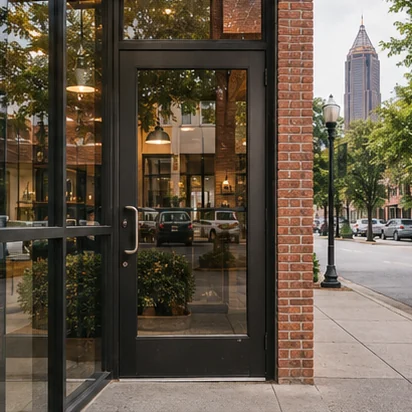
What the opening has to do during the day
An exterior storefront door may need to unlock for customers, close on its own and secure at the end of the shift. A stockroom door might need controlled access while employees are coming and going. A suite in an office building may have a mechanical cylinder, a credential reader or both. Tell us who uses the door, how often they use it and what failed first. If there are two entrances, say whether they serve the same people and whether they need to operate on the same schedule.
Make a note of where the opening sits within the building. An Atlanta high-rise can have a tower entrance, a lobby desk, a suite entrance and a parking-level door that belong to different people. Ask whether the landlord or tenant is responsible for what you need changed. Share the building's work rules or visitor sign-in requirements and confirm a place to meet. The more specific the door description, the sooner the conversation gets to the right hardware.
Keys for a business change hands
Start a rekey discussion with a list of doors and who should have access to them after the change. Staff might all need the front door while only a few people need a back office. Decide who issues keys, who is responsible for collecting them and who can authorize another copy. Keep that information with the operations or facilities lead. If someone has a shared key, check which other doors it opens before you ask to change a single cylinder.
A master-key arrangement should reflect the way people actually move through a building and who owns the openings. Existing records, core formats and rules about who can request copies can limit how the system can be changed. If moving into a new suite, see whether the manager has a hardware schedule or records for the spaces you lease. Arrange a handoff that keeps authorized staff, cleaners and service workers able to reach the areas they need at the right times.
A door list a manager can actually use
Use familiar identifiers when you write up the scope. For a small business, "front customer door," "rear delivery door" and "stockroom" may be enough. In a large property, put the tenant name, level and opening number on the list. Include who changes the status of each door at opening and closing time. Let us know where an installed reader, a key cylinder or an exit device changes the work. If you use existing building records, make sure they reflect the door that is there today.
A handoff can involve several people. The facilities lead may approve changes to a shared opening, the tenant may receive new keys and the person on duty may need a temporary route for deliveries. Agree on who makes decisions before the visit and who can test each door after it. For a busy shop, ask which changes can be handled before opening or between deliveries. Contact the right office ahead of time if the service point uses a badge or a freight entrance you cannot reach without an escort.
If the visit involves a new part rather than a key change alone, ask which pieces will be retained and how the opening will be left while a part is on order. Make sure the staff brief covers any temporary arrangement.
A failed lock can start as a closing problem
A key may be hard to turn after a door has settled, or a storefront may need a strong pull before the latch engages. Note whether the same thing happens with the door held safely open. A door dragging on its frame can stress the lock and make people think the cylinder is at fault. For a door with an overhead closer, describe whether it slams, stalls or stops just short of closing. Those symptoms are useful when you request an inspection.
If a required exit or a rated opening is involved, bring the facilities team into the call. Existing exit hardware, self-closing arrangements and other requirements affect which work belongs at that opening. A repair plan needs to leave the right exit function available. Mention previously replaced trims or missing fasteners when you describe the opening, but leave the equipment in place for inspection. If the opening is damaged, arrange a safe way to supervise it until you can speak with the person who controls the space.
Work around the building and the business
A Downtown office may need advance coordination with a lobby desk and space for service parking, while a neighborhood retail storefront may need a quieter time between deliveries and customer traffic. Tell us if a restaurant has a service entry on a separate street, whether a compound has a gate and whether there is a loading point that can be used. Agree on which entrance can be affected while work is under way. Keep the person who can make scope decisions available during the visit.
Ask what is included in the quoted work: the opening itself, the cylinder change, the number of keys and any parts that will need approval. For a door that cannot be secured at closing time, make sure that fact is clear before scheduling. If a project spans several suites, number the openings in the order you want them handled. This makes the scope easier to confirm and helps staff know which keys they are testing at the end.
Hand access back to the right people
Ask the people who use the opening to try it at the handoff. Have someone check entry from outside, normal operation from inside and whether the door returns to the position where it is meant to latch. For a multi-door key change, test the key groups on the intended doors and check that records reflect who received them. If an opening has a credential reader as well as a physical key, verify the credential side separately with the system administrator.
Write down any follow-up work that still needs an approval or a part so there is a record after the visit. If you report the door, its primary job and the most important deadline when you call, we can help you decide what to handle first. You can then brief the staff who use the opening with an access plan that makes sense for the way your business runs.
Questions about commercial locksmith
Does a tenant need landlord approval?
It depends on the lease and who controls the opening. Clarify it before booking if the door is shared or on a managed key system.
Can a storefront lock and door closer be assessed together?
Tell us if both symptoms occur at the same opening. The closing and latching behavior can help explain why the lock feels different.