

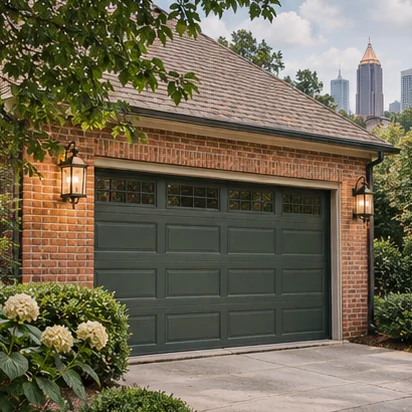
The door is heavy even when the opener is small
Springs counterbalance much of the weight of a sectional garage door. Cables help carry the movement to each side. The opener moves a door that is already intended to be balanced. When a part of that system fails, an opener may hum or lift the door only a short distance even though its motor is working. A loud bang or a door that suddenly seems crooked is worth reporting before anyone presses the button again. Keep children, pets and vehicles away from an unstable opening.
If you see a loose cable or a visibly separated spring from a safe distance, mention it. There is no need to climb, touch damaged parts or try to move the door by hand to diagnose the problem. Springs and cables can remain under heavy tension. Avoid trying the release while the door is suspended or its balance is uncertain. Give us the door's position and whether a vehicle is inside. That information makes it easier to discuss how urgent the visit is and what access needs to stay available.
Plan access while the door is out of use
A garage may hold the vehicle you need for work, while the only other entrance sits inside the house or behind a gate. Tell us whether another authorized entrance is available and whether someone can meet us there. If the door stopped above the floor or appears unstable, leave the area clear and keep people from walking under it. If you cannot tell whether a cable is still in place, describe where the door sits. A safe description is enough. You do not need to get close to a spring, line or track for a better look.
Some calls begin with the keypad or remote instead of a movement problem. Say whether the door still operates normally from a wall control and whether the symptom changed after a power loss, a change of remote or a move-in. That helps separate a control question from a door that cannot move predictably. For someone reporting a possible spring failure, the sound, position and any visible unevenness are more important than the opener brand.
At an Atlanta townhouse or home on a slope, use a safe meeting point and describe the driveway rather than pointing only to a front address. If the garage opens to a shared lane, let us know how room can be made for the visit.
Equipment comparisons
Opener options to discuss after the door check
Use these models as reference points. Ask about fit, availability and the work your opening needs before choosing a part.
LiftMaster 87504-267
A belt-drive reference with a backup battery on this configuration. Compare headroom, compatibility and replacement needs on your specific door.
Manufacturer detailsLiftMaster 98022
A wall-mount example where ceiling space matters. The door hardware and side clearance need to suit this type of opener.
Manufacturer detailsChamberlain B4613T
A residential belt-drive comparison for households looking at quieter operation and backup power. Confirm the installed rail and door requirements.
Manufacturer detailsWhen you hear the opener but the door stops
Describe how far the door goes. A door that starts down and reverses at about the same point is different from one that leans while moving or stops with a grinding sound. Note whether the wall control and the remote show the same behavior. A blocked sensor path, a travel issue and a physical obstruction can each produce a stop or reversal. Report any recent impact, work in the garage or interruption in power. If the door looks stable, you can describe the lights or display from where you stand without touching the moving hardware.
Tell us whether the last normal cycle sounded different or was slower. If you notice a flashing indicator, report what you see and the maker or model number if it is easy to read from the floor. The opener label and any details you have about the door itself are useful to compare. An opener model alone cannot establish spring size, door weight, rail clearance or the condition of the track and rollers.
A damaged panel may be part of a larger problem
If a vehicle contacted the door, say where it hit and what the door did afterward. A dent from a bumper can affect a panel and also move hardware along the side. If the door appears off its track, give it space and report the position. A photo from a safe distance can help describe the opening, but leave it as it is until it can be assessed. Do not stand under or try to prop up a door that is hanging unevenly.
The question after an impact is how much of the original opening can operate safely. Ask about the condition of the panel, hinges, tracks and closing behavior as part of the assessment. A repair that preserves the original door may make sense for some problems. A damaged section or unsupported older part may change the options. For an overhead door at a business, identify its size and use when you call so the needed equipment and scope can be discussed separately from a residential sectional door.
What to tell us about the driveway and garage
Around Atlanta, a garage may face the street, sit under the house on a slope or open to a shared drive. Describe the approach, tell us whether another vehicle blocks the working side and share any gate or property-management requirements for access. In a townhouse community, find out who controls the exterior hardware and whether repairs need written approval. If the door opens into a narrow or active drive, arrange space for the visit and let the residents who use that lane know what is happening.
If there is no separate entrance to the garage, say so before the appointment. A door sitting shut can be a different access problem from a fully open door that needs to be made secure. If a vehicle has to stay where it is, tell us which side is clear. For garages used daily, note when you last used the door normally and which remotes or keypads you rely on. That helps us distinguish a mechanical repair from an entry-control problem.
What a working repair should look like
Ask to see a full open and close cycle from a safe position after the work. Confirm the door travels evenly, responds to the normal controls and stops where expected. Ask the technician to explain any relevant safety checks and what to watch for if something changes. If work involved the opener or its controls, check the wall button, your normal remotes and any keypad you expect to use. Make sure everyone in the household knows which controls or codes are still valid.
Ask what the estimate covers and which findings could change it. A cable, spring, track, opener or damaged panel can be part of different repair plans. If choosing a replacement opener, the door should first be suitable for normal operation and the hardware should fit the opening. Tell us what the door did, where it is now and whether the garage can be reached. Those three details will help us plan the right Atlanta garage door repair visit.
Questions about garage door repair
Should I keep trying a crooked door?
Stop operating it and keep people clear. Mention the door position, any loose cables and whether a vehicle is inside.
Do I need a new opener if the motor runs but the door barely moves?
A spring, cable or door movement problem can overload a working motor. The door and opener should be assessed as separate parts of the same setup.