

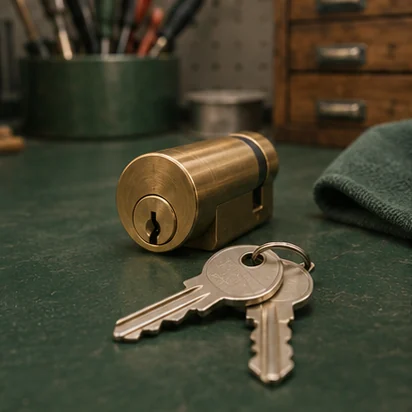
Count cylinders as well as doors
A door with a keyed handle and a keyed deadbolt has two places where an old key could still work. A utility door or a back entrance that rarely gets used may have a cylinder of its own. Write down every opening you want included and list the hardware on it. You can start from the sidewalk or driveway and work toward the rooms you use. Bring the keys you currently have and label them by door if the rings are easy to mix up.
Be clear about which keys should operate which door after the visit. One possibility is a single everyday key for the front and side doors, with a separate key for a storage area. A hardware mix may limit which cylinders can use the same key. Brands, key profiles and cylinder formats matter. A key that can slide into two locks is a clue, while a hardware check tells us whether those openings can actually share a key. Ask what would need to change if they cannot.
Plan a move-in or tenant handoff
After closing on a home, you may have received a mailbox key, door keys and a garage remote in the same envelope. Sort those out by what they operate. Mailbox locks and shared access systems may need different approval or a different provider, depending on who owns the equipment. The garage remote is a credential in its own right. Changing a house cylinder does not update the opener or remove access for an old remote. Note any keypad codes or app accounts you inherited as separate items to review.
For a rental changeover, write down the date the outgoing resident returns possession and who can approve each lock change. Then arrange access for the next resident, inspection team and authorized maintenance. If management needs a key on file, decide how the new key will be transferred and recorded. Plan for a check of the doors after cleaning or painting. Latch and strike problems can show up after a door is worked on, even when the cylinder itself accepted the new key correctly.
If several openings share keys today
Label the openings on paper before you separate old and new keys in the field. A simple list such as front deadbolt, side handle, rear deadbolt and storage door is specific enough for most homes. For a business, add suite or door numbers and the person responsible for each one. If staff need continuous access, arrange which door remains in use first and which can be changed later. Coordinate any keys that belong to the landlord or a shared part of the property.
Hardware may have been added at different times. Even in one building there may be a new cylinder on a remodeled door and an older one in a side lock. If you want fewer keys, describe the current groups first. The technician can then explain which locks can be matched, which would call for different parts and which should stay separate for practical reasons. Think about future needs as well. A new resident, vendor or staff member may need a limited set of openings long after the immediate change is complete.
Keep the old keys available until the verification is done, if they have not been lost. Then ask who should retain them or whether they should be put aside. A clear handoff is particularly useful when a manager and resident meet at different times.
If a key was lost somewhere sensitive
Tell us if the missing key was labeled with an address, taken together with identification or lost in a place where someone could connect it to the property. A key that disappeared with a bag and a key that was simply returned late call for different timing decisions. If a lock is damaged or the door will not secure right now, describe that separately. The scope of a rekey is changing the keys that operate a compatible cylinder. Other problems deserve their own inspection.
Consider every opening that used the missing key. That includes a garage-to-house entrance, a basement side door and an office suite's rear door. If different people have keys for different areas, write down who needs access going forward. For a shared building, coordinate with management before altering the lock. They may have obligations around emergency access, approved hardware or a shared key system that you cannot see from a single key copy.
When replacing a lock makes more sense
Ask for an assessment if the cylinder spins, the bolt sticks, a handle is loose or the frame around the lock has been forced. You may be able to preserve some components and replace others. Record whether the hardware works when the door is open and compare that with how it works when the door is shut. A door that shifts against the frame can have a mechanical issue even with a well-functioning cylinder. The goal is an opening you can use comfortably along with an updated key policy.
Some rental or office doors use interchangeable cores or a managed key system. Building paperwork or an existing hardware schedule may help identify it. Ask the property representative who controls additional keys and whether the changes need to stay within that system. An isolated change to one opening is a different job from a building-wide change. If you need both, agree on the sequence so people can still reach the spaces they are authorized to use during the changeover.
Finish with a simple access check
List the doors on the work order, then test each new key on the openings it is meant to operate. If the old key is available and should be retired, test that the agreed locks no longer accept it. Confirm the door closes and the bolt engages without pulling or lifting the door. Label keys by assignment while keeping the property address out of the labels you carry around. Give authorized people a clear place to get a copy or request a change.
Before you call, put the door count, the access list and any existing keys in one place. Share whether your priority is a move, a single missing key or a regular turnover. The plan can be as simple as an update to one deadbolt or as involved as coordinating several openings. We can work through those decisions with you before you commit to a visit.
Questions about lock rekeying
Do I need the old key?
Tell us if it is available and whether the door is currently open. The hardware and access to it determine the options.
Will rekeying change my garage remote?
The opener and its remotes are a separate access system. Tell us about both if a key and remote were lost together.